Causal Inference in Quantitative Pharmacology: Part VI
Reverse Translation to Molecular Pharmacology

Having spent almost half a decade in Translational Research in Academia, when I first moved to Pharma R&D, I observed something surprising - Translational Science as a discipline had - unlike academia- the singular focus on progressing candidate molecules through Preclinical development to Phase II. So just bench-to-bedside (NOT the other way round)
In pre-clinical developent, Pharmacology and Translational Science disciplines tend to work hand-in-hand, so much so that for many in Pharmacology, a translational biomarker is synonomous with a Pharmacodynamic biomarker. And in Clinical Pharmacology, a translational study might only be thought of as a small Phase I study where an experimental human model (eg. of pain) is studied for PK-PD effects.
Data Science and Causal Inference helps Pharmacology and Translational Science broaden their horizon while still remaining focussed on the goal by
📌 Bringing in RWD (EHRs, biobanks etc.) and reverse translating it to Phase I, II design and even informing on non-clinical assay development.
📌 Adding biomarker categories such long term disease progression. This is especially relevant as PD biomarkers are limited to the duration of the study and often one needs to show differentiation of a novel drug on its prolonged use.
📌 Reverse translation all the way back to molecular pharmacology with real world evidence on long term impact of modulating a certain target class in patient populations.
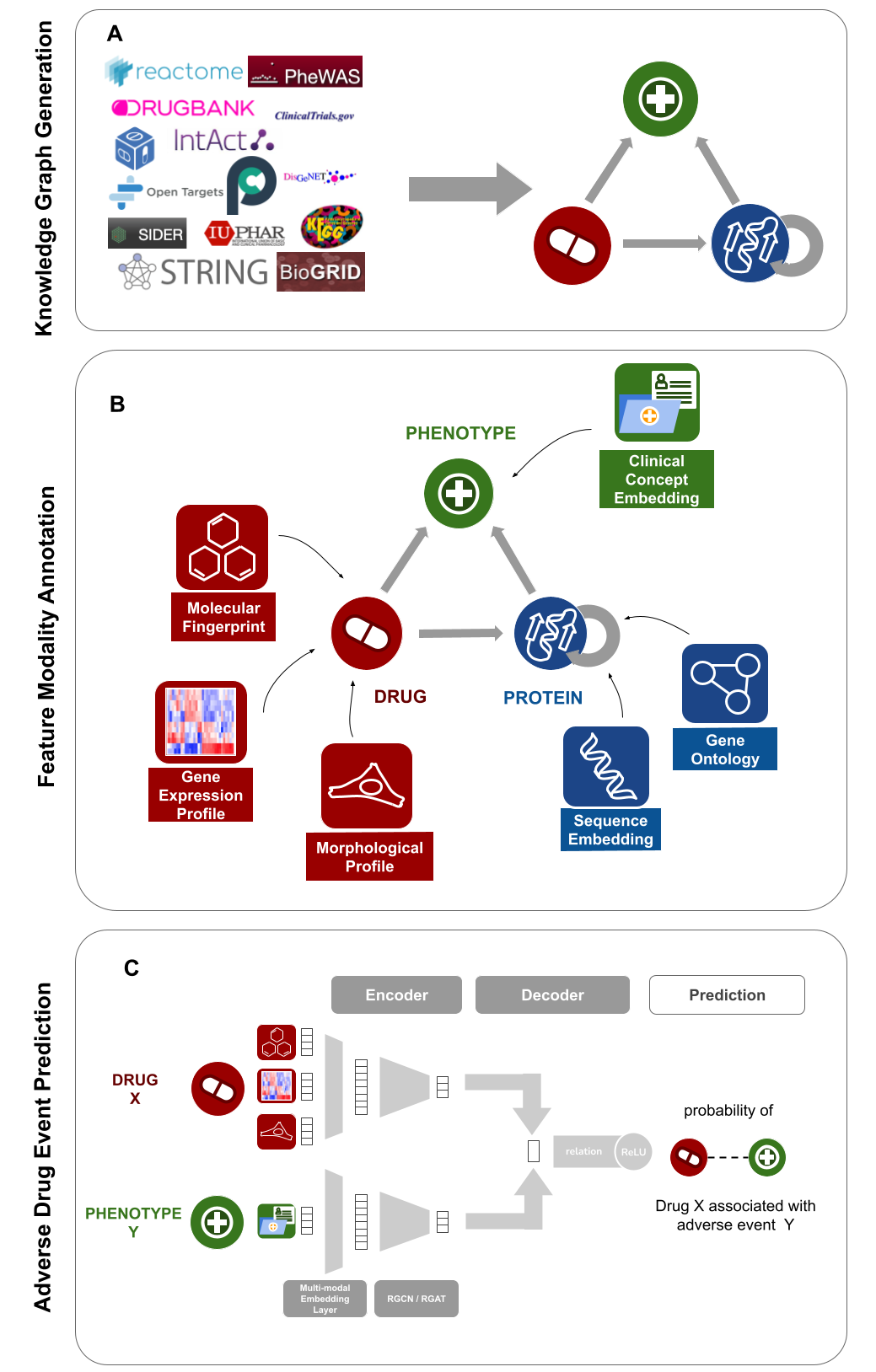
In fact, in one of my postdoc projects a few years back, we set out to predict these biological target-level safety issues which can be inferred with population-level data in the form of Knowledge Graphs with Drug Adverse events. The hope was that predicting certain safety associations with this approach could help de-risk a biological target at the very early stage of Target Validation.
🎊 This work has now been published in a Cell Press journal:
https://www.cell.com/heliyon/fulltext/S2405-8440(23)06649-5
In conclusion, I would like to say that Causal Inference and Data Science has valuable contributions to make not just in Clinical and Non-clinical Pharmacology but also at the very start of the Drug Discovery project - in molecular pharmacology.